

Is Antigua Guatemala Worth Visiting? | A 2-Week Travel Guide

Antigua de Guatemala is the kind of place where you can spend weeks without feeling like you've run out of things to do. The historic centre is compact enough to explore on foot, yet big enough to discover something new every day. Everyday life unfolds alongside the cafés, markets, churches and restaurants that make Antigua such an easy place to settle into. And the appeal of this city goes beyond its colonial streets. Active volcanoes surround it, and on a clear day, you might even spot El Fuego erupting in the distance from one of the many rooftops around town. If you'd like to get closer to the volcanic landscape, you can take on the famous Acatenango overnight hike or visit Pacaya, where the ground can be hot enough to roast your own marshmallows.
We spent a little over two weeks in Antigua in June 2023. During our visit, we worked, explored the city, hiked Pacaya and Acatenango, shopped at the local markets and gradually got used to the rhythm of the town. Our first accommodation didn't feel quite right, which is why we moved after a few days. We eventually found a room in an old colonial house that made us want to stay even longer.
This two-week stay guide covers where we stayed, how we got around, what we enjoyed doing, where we ate and a few practical tips for planning your own trip.
Why Visit Antigua?
Antigua sits in a valley about 45 km (28 miles) west of Guatemala City, surrounded by three volcanoes: Agua, Acatenango and Fuego. This combination of historic architecture and dramatic volcanic scenery is a big part of what makes the city so appealing.
Antigua is a UNESCO World Heritage Site, recognised for its well-preserved Spanish colonial architecture, religious buildings and historic layout. Founded by Spanish colonists in the 16th century, it served as the capital of the Spanish colony of Guatemala for more than 200 years. As you wander through its streets, you'll come across colourful buildings, old churches, cobblestone streets, quiet courtyards and grand colonial structures, alongside modern cafés, restaurants and shops.
The surrounding volcanoes are another major draw. Acatenango is particularly popular for overnight hikes, where you can camp at high altitude and watch neighbouring Fuego erupt across the valley. It's an unforgettable experience, but you don't need a packed itinerary to enjoy Antigua. Some of our favourite moments were much simpler: walking through different parts of town, stopping for coffee, browsing the markets or sitting somewhere with a view of the volcanoes.


Antigua's cultural character is just as interesting as its architecture and scenery. Spanish colonial and Indigenous Maya influences come together in the city's food, crafts, religious traditions and festivals. During Semana Santa, which takes place in March or April in the week leading up to Easter Sunday, Catholic processions wind through the streets past elaborate carpets made from flowers, coloured sawdust and other materials. It's one of Antigua's most distinctive traditions and a particularly striking time to experience the city.
We also found the people in Antigua friendly and welcoming, which added to the overall experience and made it an easy place to settle into for a longer stay.
Where to stay in Antigua
Antigua is compact enough that you don't need to stay right on the main square to be close to everything. In fact, we preferred being just outside the busiest part of the historic centre, where it was quieter but still easy to walk everywhere.
For a first visit, we'd look for accommodation within or just around the historic centre. Staying centrally makes it easy to explore on foot, grab a coffee, go out for dinner and get back to your accommodation without relying on taxis or tuk-tuks. Being close to the main square is convenient, but the streets immediately around it can be busier, so a quieter side street can be a better choice if you're staying for more than a few nights.
Our Stay in Antigua
When choosing where to stay in Antigua, it's worth considering how much time you'll spend at your accommodation. We initially booked a private room in a larger house, but found it a little too basic for a longer stay, particularly because there wasn't enough space to sit and work comfortably during the day.
After exploring the city for a few days, we decided to look for somewhere else and found a room in a traditional colonial house. It turned out to be a much better fit, with brighter, more spacious shared areas, a well-equipped communal kitchen and a rooftop overlooking the surrounding volcanoes. On clear days, we could even see Fuego erupting in the distance.
The location was another big plus. The house was just a minute from Iglesia de La Merced and a short walk from the main square, yet tucked away on a relatively quiet street. The WiFi was reliable, and our host was exceptionally helpful. We ended up extending our stay to two weeks.
For a short visit, staying within walking distance of the historic centre is probably the most important consideration. If you're planning to stay longer, however, a comfortable living space, reliable WiFi and access to a kitchen can make a real difference. It's also worth looking for a quieter street just outside the busiest part of town, so you can enjoy the convenience of a central location without being right in the middle of the activity.

Getting Around Antigua
One of the easiest things about Antigua is its size. Most of the historic centre can be explored on foot, and walking is often the most enjoyable way to get around.
We spent a lot of our two weeks simply walking from one part of town to another. The cobblestone streets aren't always the smoothest, but distances are manageable.
For shorter journeys, taxis and tuk-tuks are readily available. If you're using one, it's a good idea to agree on the fare before getting in.
For trips outside the city, such as visits to Pacaya and Acatenango, organised tours and shuttle services are common options. We used tours for both volcanoes, although our reasons for doing so were slightly different.
Things to Do in Antigua Guatemala
There's plenty to do in and around Antigua during a short visit, but if you have a week or more, you'll have time to mix bigger excursions with slower days in town. We'd definitely recommend it.
1. Hike Acatenango and Watch Fuego Erupt
An absolute highlight of our time in Guatemala was the overnight Acatenango hike. It was easily one of our favourite experiences in the country and one of the most memorable adventures we've had in years.
The hike to base camp took us around four hours. It's a challenging climb, with steep sections and the added difficulty of gaining altitude. We found it manageable, although how difficult you'll find it depends largely on your fitness level and hiking experience. The altitude can make the ascent more demanding, while the descent can be tough on your knees. Hiking poles are highly recommended, especially for the way down, when you'll descend approximately 1,400 metres over loose, sometimes slippery terrain.
From base camp, you get a close view of neighbouring El Fuego. If conditions cooperate, you can watch it erupt throughout the afternoon and into the night. When we visited, we were told that Fuego had been relatively quiet in the period leading up to our hike. Even so, it started erupting almost as soon as we reached base camp.
The weather stayed clear for most of the afternoon, and we saw eruptions roughly every 30 minutes. Each one felt just as surreal as the last.
Unfortunately, clouds rolled in around nightfall and obscured our view of Fuego. We were disappointed to miss the glowing lava, which is only visible after dark.
Our luck changed again at around 3:30 a.m. Whenever we woke up during the night, we took a quick look out of the window, and this time the clouds had disappeared. We were able to see Fuego throwing lava into the night sky.
Early the next morning, we continued towards the summit of Acatenango for sunrise. The final stretch took us another hour and a half. It was freezing at the top, but we had prepared for the cold. The views at sunrise made getting up early worthwhile.
Fuego continued erupting throughout the morning, with ash eruptions roughly every 20–30 minutes. Seeing an active volcano from so close was an experience we'll never forget.


We booked our hike with Wicho & Charlie's. It wasn't the cheapest option, but we specifically wanted proper sleeping huts and enough warmth for the overnight stay. Everything was very well organised, and based on our experience, we'd happily recommend them.
Keep in mind that the weather and activity of El Fuego can change considerably. We visited during the rainy season, and clouds can obscure the volcano and the surrounding views. Volcanic activity is also unpredictable, so there's no guarantee you'll see eruptions during your visit. It's worth approaching the hike with realistic expectations, even though the experience is remarkable regardless.
2. Hike Pacaya Volcano
Pacaya is a shorter volcano experience than Acatenango and can be done as a day trip from Antigua.
We booked our tour only a day in advance. We mainly chose an organised tour for the convenience of transportation. The hike itself took around two hours and was straightforward enough that, in hindsight, the walking part could probably have been done without a tour. The pickup and drop-off were convenient, though, which made the arrangement worthwhile for us.

We chose an afternoon departure because of our work schedule. Normally, we'd probably choose a morning hike, but the afternoon had an advantage too: the possibility of watching the sun set behind the volcanic landscape.
The drive from Antigua took about an hour and also gave us a glimpse of the contrast between the historic centre and the poorer neighbourhoods and villages outside it. It was a reminder of how much a place can change within a relatively short distance, and how different realities can exist side by side.
The weather wasn't ideal during our climb. It was cloudy, so the views on the way up were limited. After about an hour of hiking, we reached the area near the crater. Once the clouds cleared, we could see smoke rising from the volcano. Pacaya is still active, although there hadn't been lava flows for some time when we visited.
One of the most interesting things was seeing the contrast between the black volcanic rock and the green vegetation growing in the surrounding landscape. The ground was still hot in places, hot enough to roast marshmallows, which made the experience even more memorable. It was a fun way to experience an active volcano up close, even without seeing any lava.


On the way back down, the clouds began to clear more, and we finally got some good views of the surrounding volcanoes. The changing weather made quite a difference, revealing parts of the landscape that had been hidden on the way up.
3. Cool Off at Finca El Pilar
Finca El Pilar is a nature reserve just outside Antigua, known for its forest trails, birdwatching and natural swimming pools. It's a nice place to escape the city for a few hours and enjoy some time in nature.
The reserve has three natural spring-water swimming pools, as well as hiking trails, including one known as the Antigua Mountain Trail. It's also home to a wide variety of bird species, with a dedicated area where you can observe hummingbirds.
There are several ways to get there from the centre of Antigua. We decided to walk, which took us around 45 minutes. Taking a tuk-tuk is an easier and quicker alternative if you'd rather save your energy for exploring the reserve.


The weather wasn't ideal on the day we visited. It was cloudy and rainy, although still warm. Some of the views would have been better on a clear day, but we still caught a few unobstructed glimpses of the surrounding landscape whenever the clouds cleared. After walking through the forest, we spent some time sitting quietly and watching the hummingbirds. They were beautiful to see up close, darting around so quickly that it was sometimes difficult to follow them with our eyes.
We ended our visit with a dip in one of the pools. Although they look like ordinary swimming pools, the water comes from a natural mountain spring nearby, making for a refreshing way to end the day. Toilets and changing rooms are also available.
Entrance fees
The prices during our visit were:
Hiking only: Q65
Hiking and swimming pool access: Q75
Swimming pool access only: Q25
Prices may have changed since our visit, so it's worth checking the current rates before you go.
4. Walk up to Cerro de la Cruz
The Hill of the Cross, or Cerro de la Cruz, is one of the easiest viewpoints to reach from Antigua and well worth a short visit.
The walk up involves a series of steps through the forest. The shaded path makes the climb more comfortable, even on a warm day, and it doesn't take long to reach the top.
Once there, you'll find benches and plenty of places to sit and enjoy the panoramic view over Antigua, with Agua volcano rising in the background. We visited around sunset, when the fading light added another dimension to the scenery, casting warm colours across the sky and making it a lovely spot to pause before heading back into town.
If you'd prefer to skip the climb, you can also take a tuk-tuk up to the viewpoint.
5. Spend Time Simply Exploring the City
Antigua is one of those places where you don't need to fill every day with scheduled activities. Some of our favourite moments came from simply walking around without a particular destination, stopping at cafés, admiring the architecture and enjoying the views whenever the volcanoes appeared between the buildings.


There are plenty of cafés around town, many with courtyards, gardens or rooftop seating. Taking a break for coffee is a natural part of the Antigua experience, so it's worth trying some locally grown Guatemalan coffee or a traditional chocolate drink while you're there.
Of course, there are also a few famous sights you shouldn't miss. The Arco de Santa Catalina is one of Antigua's most recognisable landmarks and features in many of the city's photos. Set along a beautiful cobblestone street, the arch frames a lovely view of Agua volcano on a clear day.
Another good place to spend some time is Parque Central, the main square at the heart of the city. Find a spot to sit and watch everyday life unfold around you, from locals meeting up to vendors going about their business.
Beyond the most photographed streets, Antigua is well worth exploring at a slower pace. Wander through the markets, browse small tiendas, visit churches and follow the quieter residential streets. These everyday corners of the city offer a different perspective on Antigua and give you a better feel for what life here is really like.
6. Explore the Second-Hand Clothing Market
We're not sure how or where, but we heard about Antigua's large second-hand clothing market and wanted to check it out. We'd also heard that it wasn't easy to find, and that turned out to be true. Coming from the city centre, the market is located behind Mercado Central Antigua Guatemala, between the main market and the outdoor farmers' market. We walked around a few times before finally finding the right alley.
We've marked the location on the map, which you can find here.
Inside, you'll find rows and rows of packed stalls and racks of pre-owned clothing. Finding something good takes a bit of searching, but prices are low, and the vendors don't constantly try to sell you things, which makes browsing much more enjoyable.
It's a fun place to spend some time, especially because shopping here is such a different experience. The stalls are packed, and you almost have to crawl your way through the piles of clothing to find something worthwhile.
If you're looking for warmer clothes for Acatenango or another hike and would rather not buy expensive outdoor gear or rent something, this market is definitely worth checking out too.
Food and Drinks in Antigua
Antigua has plenty of places to eat, from traditional Guatemalan food to international restaurants, cafés and bars. Whether you're looking for a quick lunch, a relaxed coffee break, or somewhere to enjoy a drink in the evening, you'll find plenty of options around town.
Here are a few places we visited or enjoyed during our stay:
Antigua Brewing Company – A good spot for drinks and live music, especially if you're looking for somewhere to spend the evening.
Toto's Burger – A great place to get a burger, particularly after a long day of hiking.
Rooftop Antigua – A relaxed spot for coffee, food, or drinks with a view over the city.
Rincón Antigüeño – A good choice for a typical Guatemalan lunch if you want to try something local.
Street food near Iglesia de La Merced – Worth checking out if you want to sample local flavours without spending too much. Keep an eye out for the stalls around the church and try whatever catches your attention.
If you're staying somewhere with a kitchen, the local market is also worth a visit. We bought fresh fruit and vegetables there because the prices were considerably lower than at the larger supermarkets. It's a practical way to save money during a longer stay, and browsing the stalls is an experience in itself.

Antigua Guatemala 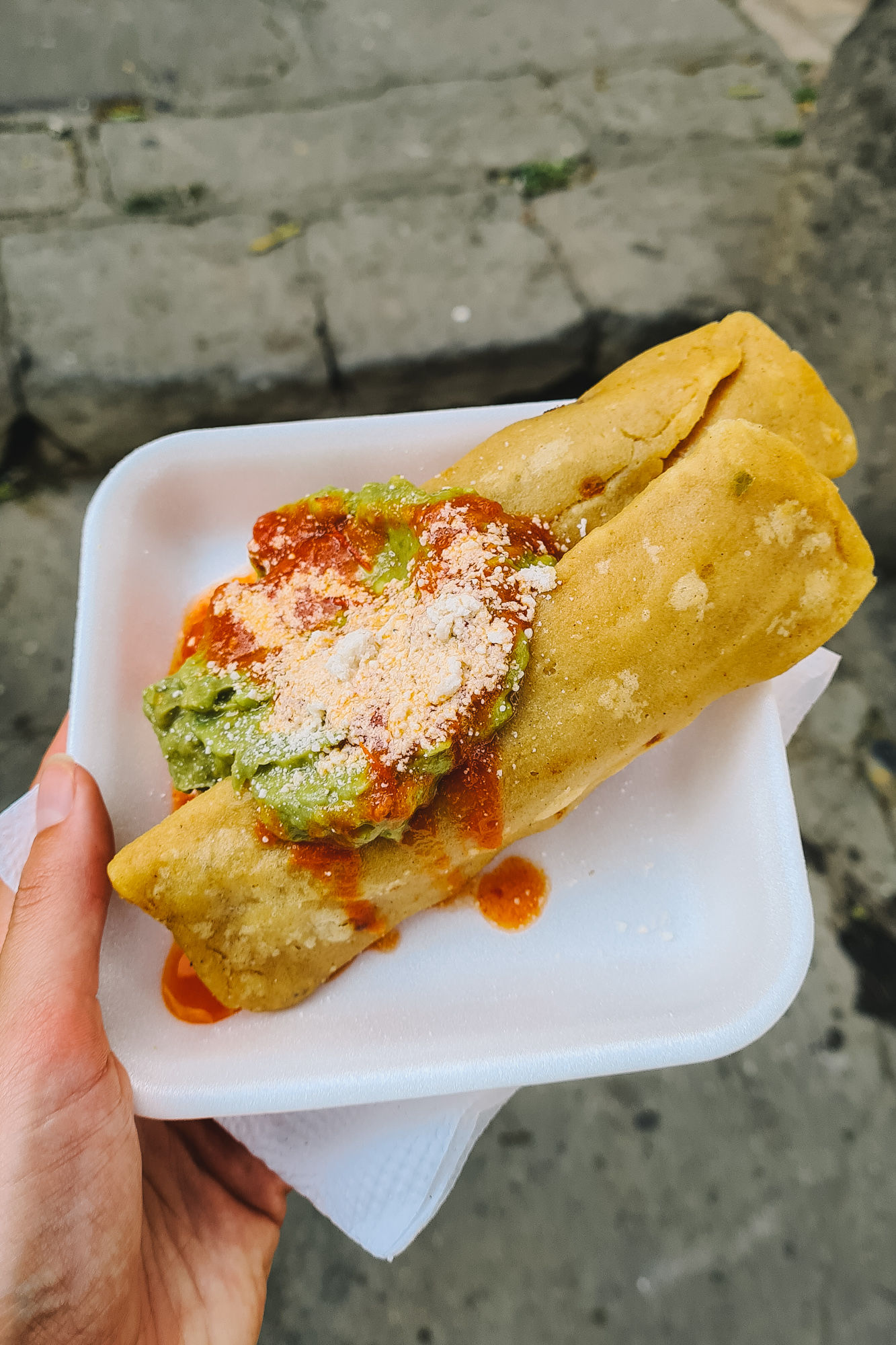

Practical Tips for a Longer Stay in Antigua
Groceries
Antigua is a convenient place to stay for a longer period, especially if you have accommodation with a kitchen. Finding groceries and cooking for yourself is relatively easy. Small tiendas are scattered throughout the city, so basic supplies and snacks are never far away.
There are two larger supermarkets west of Plaza Mayor: La Bodega and Despensa Familiar. We found that La Bodega had a wider selection, while Despensa Familiar was generally a little cheaper. For fresh fruit and vegetables, the local market was our preferred option.
One thing that surprised us was the cost of living in Antigua. We'd expected Guatemala to be relatively inexpensive, but prices in Antigua were higher than anticipated. During our stay, we also noticed that prices seemed considerably higher than the older information we'd come across suggested. It's worth keeping this in mind when budgeting for your visit.
Cash and ATMs
IIt's useful to carry some cash, particularly for market shopping and smaller businesses. The local currency is the Guatemalan quetzal (GTQ), and you'll find banks, ATMs and currency exchange services around town.
During our stay in 2023, the banks we used had a withdrawal limit of Q2,000 and charged a fee of at least Q30 per withdrawal. These were our own experiences at the time, so limits and fees may differ between banks and may have changed since then.
Internet and SIM Cards
WiFi was widely available in accommodation, cafés and restaurants. Our accommodation had a reliable connection, but we also bought a Claro SIM card as a backup for when we were out and about. The Claro shop near the main square made the process quick and straightforward, and the SIM worked well both in Antigua and elsewhere in Guatemala.
Laundry
Getting your laundry done is also straightforward, which is handy if you're staying for more than a few days or returning from a hike. We used both Lavandería Landívar in the north of the city and Spring Laundry on the east side. Both had our laundry ready the same day and charged reasonable prices.
Rainy Season in Antigua
We spent our time in Antigua in June, during the rainy season, which generally runs from May to October. The dry season runs from November to April and is generally the busier period.
Month | Season | Typical weather |
January | Dry | Sunny days, cool evenings, very little rain |
February | Dry | Warm, sunny, and generally dry |
March | Dry | Warmer days, mostly clear skies |
April | Dry season ending | Usually warmest; rain becomes more likely toward the end of the month |
May | Rainy season begins | More frequent afternoon showers; the landscape starts turning green |
June | Rainy | Frequent rain, often in the afternoon, with cloudy periods |
July | Rainy | A possible mid-season drier spell, known as the canícula |
August | Rainy | A mix of sunny mornings and afternoon showers |
September | Rainy | Typically one of the wettest months |
October | Rainy season ending | Frequent showers, gradually transitioning toward drier weather |
November | Dry season begins | Rain decreases and conditions generally improve |
December | Dry | Mostly sunny, pleasant days and cool evenings |
Rain didn't cause us too many problems during our stay in Antigua. It tended to arrive mainly in the afternoons, while mornings were often warm and sometimes even hot. This made it relatively easy to plan our days around the weather, with sightseeing and outdoor activities usually best done earlier in the day.
For us, the bigger concern was visibility rather than the rain itself. We were particularly worried about clouds during our overnight Acatenango hike, as seeing Fuego erupt was high on our bucket list.
In the end, we got lucky with the conditions during the hike, although clouds did roll in after nightfall and eventually blocked our view of Fuego. Luckily, we'd already seen several eruptions by then and got to see more once the clouds cleared at dawn.
The dry season is generally the safer choice if clear skies and volcano views are a priority. However, visiting during the rainy season has its advantages too. The biggest one for us was experiencing the city with fewer crowds. The surrounding landscape was also lush and green, adding to the scenery around Antigua. And in the end, the rain rarely disrupted our plans.
If you're visiting during the rainy season, it's worth keeping your plans flexible and scheduling hikes and other outdoor activities for the morning whenever possible. Just remember that mountain weather can be unpredictable at any time of year, so even a clear morning in the dry season doesn't guarantee good visibility later in the day.
Is Antigua Worth Visiting?
Absolutely. We really enjoyed our time in Antigua. Although the city can be quite touristy, it never took away from our experience. We loved the combination of colonial architecture, Central American culture, friendly people and a relaxed atmosphere, with plenty of cafés, markets and interesting streets to explore.
What worked particularly well was the combination of a walkable historic city and easy access to much more dramatic landscapes. You can spend one morning wandering through colonial streets and trying locally grown coffee in one of the many cafés, then head out for a volcano hike the next day. The hiking around Antigua offers plenty of variety, and the overnight hike up Acatenango was a definite highlight. For us, that experience alone made the stay worthwhile.
We spent a little over two weeks in Antigua, which gave us enough time to settle into the city rather than rush from one activity to another. We could easily have stayed longer. Whether you're looking for adventure, cultural experiences or simply a pleasant place to slow down for a while, Antigua has something to offer. It's well worth including in your Guatemala itinerary.


