

La Palma Travel Guide | What to Do, Where to Stay & How to Get Around

La Palma is one of the steepest islands in the Canary Islands, rising dramatically from the Atlantic Ocean. During our month here, we discovered an island that is as rewarding to explore as it is easy to slow down in. Lovingly nicknamed La Isla Bonita, La Palma felt different from some of the other Canary Islands. It was quieter, less crowded, and still closely connected to nature and everyday island life.
La Palma sits in the western part of the Canary Islands and covers around 708 square kilometres, with roughly 85,000 inhabitants. We came here looking for pleasant winter weather, plenty of opportunities to be outdoors, and somewhere we could spend several weeks without feeling surrounded by mass tourism. What we found was an island where we could hike, explore volcanic landscapes, spend time at the beach, work remotely, and still have plenty of quiet days in between.
Why La Palma
We initially looked at several places in the Canary Islands. We wanted to escape the European winter, and the archipelago's mild climate was a big part of the appeal. We visited in January and enjoyed plenty of pleasant days, although we quickly learned that La Palma has several different microclimates. While the coast can be warm and sunny, the mountains are often much colder, windier or covered in clouds.
The quieter atmosphere was another major reason we chose La Palma. Compared with some of the more popular Canary Islands, it felt much less crowded and more connected to everyday island life. There were certainly tourists around, especially when cruise ships arrived in Santa Cruz, but it never felt like the island existed solely for visitors. We liked being able to walk through town, stop for coffee, go to the beach and then disappear into nature without feeling like we were following a typical tourist route.
We also wanted somewhere where we could spend a lot of time outdoors. We love mountains and hiking, and La Palma offered plenty of opportunities to explore on foot. At the same time, the coast was never far away, which meant we could have an active day and still end it by the sea.
Getting to Know La Palma
La Palma has an incredible variety of landscapes packed into a relatively small island. The higher slopes are covered with pine forests, deep ravines cut through the terrain, and the southern part of the island becomes increasingly volcanic, with lava fields, craters and dark volcanic rock. In the centre lies the enormous Caldera de Taburiente, while the mountains rise to more than 2,400 metres at Roque de los Muchachos.
The island's volcanic history is visible almost everywhere. La Palma was formed through volcanic activity, and the 2021 eruption at Cumbre Vieja added another recent chapter to that history. In the south, particularly around Fuencaliente, the volcanic character of the island is especially striking, with dark rock contrasting against green vegetation and the blue Atlantic.
But there is plenty more to the island than volcanoes. La Palma has dense forests, traditional villages, small towns, black-sand beaches, natural swimming areas and spectacular viewpoints. One of the things we enjoyed most was how quickly the scenery could change. A day could take us from a forest trail to a volcanic landscape and then down to the coast.
La Palma is also famous for its exceptionally clear night skies. The high-altitude area around Roque de los Muchachos is home to one of Europe's most important astronomical observatories, and the lack of light pollution makes the island particularly special for stargazing. We eventually experienced this for ourselves, and it became one of the highlights of our stay.


Staying in Santa Cruz de La Palma
For our month on the island, we based ourselves in Santa Cruz de La Palma, the capital. The city is built against the slopes above the coast, with narrow streets, staircases and lots of elevation changes. We quickly got used to the fact that almost every walk involved at least a little climbing.
Santa Cruz itself is a lovely place to stay. The historic centre has colourful buildings, traditional wooden balconies, small cafés, restaurants, shops and a pleasant waterfront. It also made a practical base for us because of the bus connections to other parts of the island.
When we started looking for accommodation, we initially searched across several of the Canary Islands. Eventually, we found a charming little house in Santa Cruz that we called Casita Drago. It is tucked slightly uphill from the main street, which was both a blessing and a challenge. Getting down into town was easy enough, but walking home after a long day of hiking felt like an additional workout.
The house itself was small but cosy. We had a living room, a fully equipped kitchen, a bedroom and a bathroom, with the rooms spread over several levels. The kitchen table was large enough for both of us to work from, and the internet connection was surprisingly reliable, which was important since we were working during our stay. The best part, however, was the rooftop terrace. From there, we could look out towards the hills behind us and the ocean in front. It became our favourite place for morning coffee and for sitting outside after a long day.
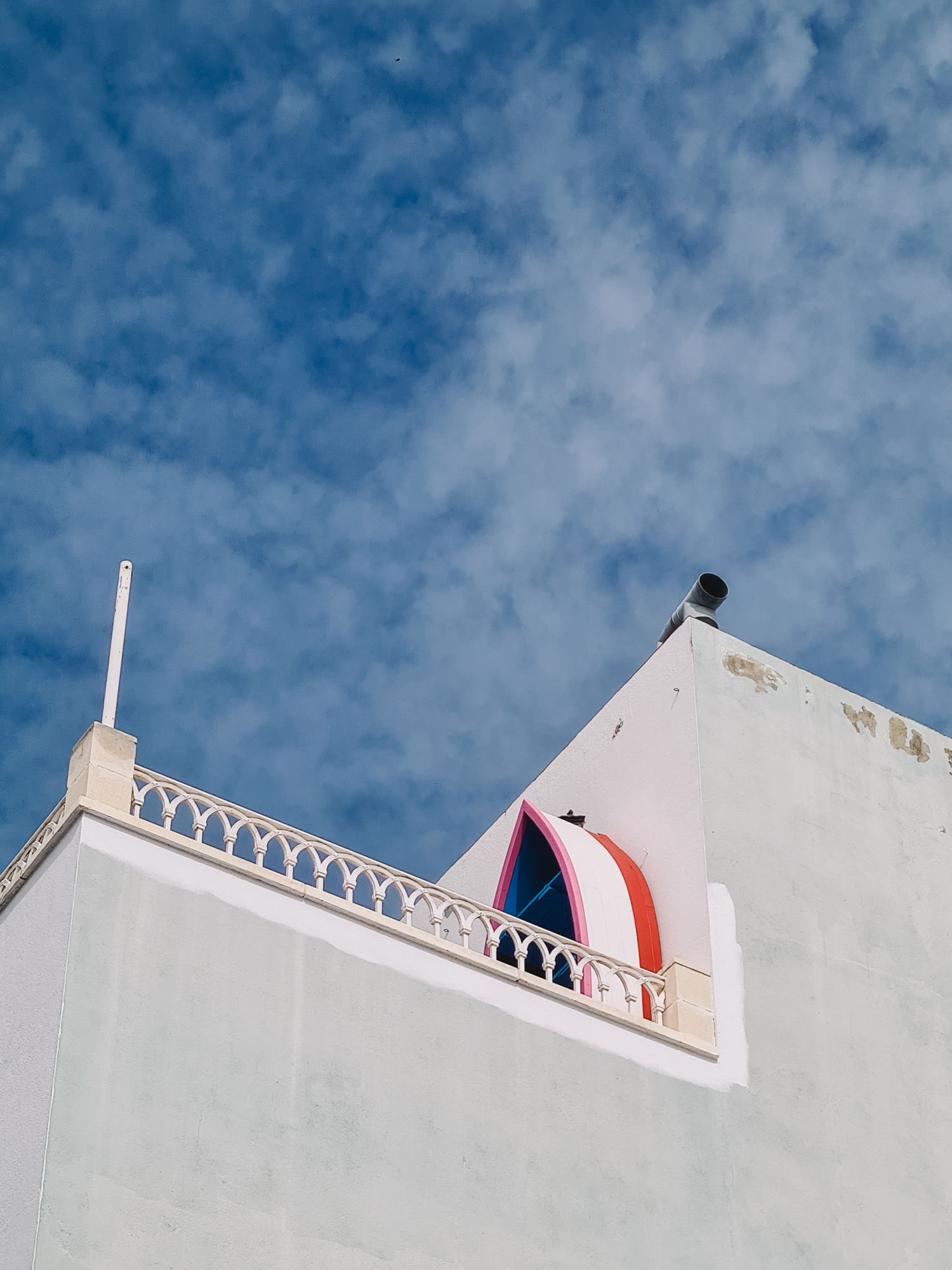


Living there also meant getting used to the practical side of the city's layout. Even grocery shopping could become exercise. Our house was several streets above the main road, while most of the larger supermarkets were closer to the coast. SuperDino was our main supermarket and had pretty much everything we needed, while smaller shops closer to the centre were convenient when we only needed a few things.
The beach was another huge advantage of staying in Santa Cruz. It took us only about eight minutes to walk there from our house, and in January it was pleasantly quiet, yet still warm. There were always some people around, but never enough to make it feel crowded. As mentioned, the only time we noticed a real increase in visitors was when a cruise ship arrived in the harbour. However, even then, most people seemed to disappear into the shops and restaurants, leaving the beach relatively relaxed.
Getting Around La Palma Without a Car
Renting a car is probably the easiest way to explore La Palma, especially if you want to reach remote hiking trails, visit several places in one day, or have complete freedom over your schedule. However, travelling around the island without a car is also possible, particularly if you stay in Santa Cruz de La Palma or another well-connected town.
La Palma has a network of public buses connecting Santa Cruz with many towns and villages across the island. The buses are generally affordable and can get you to several popular areas, although routes can be less frequent in more remote parts of the island. For some hikes and viewpoints, you may need to plan your day around the bus timetable or combine public transport with an organised transfer.
We ended up using buses for much of our month-long stay and found that they worked better than expected. Some journeys took longer than they would have by car, but the slower pace also meant we could simply sit back and enjoy the scenery. On our first bus ride, for example, the bus wound its way up the mountainside with views opening out towards the coast, making the journey part of the experience rather than just a way of getting from A to B.
If you're planning to hike extensively, a car will give you considerably more flexibility. For a longer stay, however, you don't necessarily need one for the entire trip. In the end, the buses worked well enough for us that we didn't feel we needed a car, even for a month-long stay.

Things to Do in La Palma
La Palma is small enough to explore easily, but there is still plenty to keep you busy for a longer stay. These were some of the experiences we enjoyed most during our month, and together they give you a good idea of what the island has to offer.
1. Hike Cubo de La Galga
Our first hike was Cubo de La Galga, and it was a great introduction to La Palma. We took the bus from Santa Cruz to the starting point, and the journey itself was surprisingly scenic. The road climbed higher and higher as it wound along the slopes, occasionally opening up to views over the coastline.
We got off near the Cubo de La Galga Information Point and started hiking towards the viewpoint. After the streets of Santa Cruz, it was lovely to suddenly find ourselves surrounded by greenery and forest. The trail felt peaceful and lush, and although the viewpoint was a nice destination, we enjoyed the forest itself just as much. The hike was 6.6 km long, with 450 metres of elevation gain, and took around 2 to 2.5 hours.
2. Explore Caldera de Taburiente National Park
Caldera de Taburiente National Park is one of the best places to experience La Palma's mountain scenery. The enormous volcanic caldera is surrounded by steep cliffs and covered in dense pine forests, creating a very different landscape from the coast.
If you're travelling without a car, you can reach the park by bus from Santa Cruz de La Palma and get off at the Centro de Visitantes de La Caldera de Taburiente. From here, you can start one of the longer hiking routes through the park. The route to Mirador de La Cumbrecita is around 18.5 kilometres long, with 770 metres of elevation gain, so it's best suited to hikers with some experience and a reasonable level of fitness. It took us around six hours to complete.
The trail takes you through pine forest and gradually climbs higher into the mountains, with occasional openings offering views of the surrounding cliffs and caldera. Eventually, you reach Mirador de La Cumbrecita, which can also be accessed by car. After spending much of the day hiking through the forest, arriving at a viewpoint with a parking area feels a little unexpected, but the views make the effort worthwhile.
If you're doing this hike using public transport, make sure to check the bus times in advance and allow some flexibility for the return journey. Our bus was late on the way back, so we ended up waiting a little longer before heading back to Santa Cruz.


3. Watch the Sunset and Stargaze at Roque de los Muchachos
One place we were particularly excited to visit was Roque de los Muchachos, the highest point on La Palma at more than 2,400 metres above sea level. We actually visited twice, and the two experiences were completely different.
The first time, we joined a sunset and stargazing tour. We are normally independent travellers and don't often book organised excursions, but this was one of those occasions where having a guide made sense. We were curious about the observatory and wanted to learn more about astronomy on La Palma rather than simply driving up there ourselves and looking around.
We arrived in time for sunset and watched the landscape change as the light faded. Once it became dark, the real highlight began. The skies around Roque de los Muchachos are exceptionally clear, and with very little light pollution, the stars were incredible.
4. Hike Around Roque de los Muchachos
We returned another day for a daytime tour to Roque de los Muchachos. For us, the organised transfer was mainly a convenient way to get to the trailhead and back without renting a car just for the day. The tour company dropped us near the start of the trail and picked us up later at a different location (Pico de la Cruz). The short hike is 5.2 kilometres long, with 150 metres of elevation gain, and takes around 2 to 2.5 hours to complete. It's perfectly doable independently, so you can either go at your own pace or stay with the group if you prefer.
The weather was quite cloudy during parts of the hike, but every now and then the clouds opened up and revealed the enormous landscape below. Those brief moments when the views appeared were absolutely worth waiting for.


5. Take in the View from Mirador de la Concepción
If you're staying in Santa Cruz de La Palma, Mirador de la Concepción is an easy stop to add to your plans. Located just above the city, it offers panoramic views over Santa Cruz, the coastline, and the surrounding landscape. It's a relatively short outing, making it a good option when you don't want to dedicate an entire day to sightseeing.
It's also a nice example of how easy it is to combine sightseeing with everyday time in Santa Cruz. You can visit in the morning, explore the city afterwards, and stop for coffee or lunch along the way.
6. Explore Los Llanos de Aridane
Los Llanos de Aridane is the largest town on the western side of La Palma and makes a good stop if you want to see a different side of the island. It has a lively centre with shops, cafés, restaurants, and traditional streets, making it a nice place to spend a few hours away from the main tourist areas.
The surrounding area is also worth exploring, particularly because of the impact of the 2021 volcanic eruption. Parts of the landscape and nearby communities were significantly affected, and seeing these changes adds important context to La Palma's recent history.
You don't necessarily need a fixed itinerary here. After exploring the town, you can simply follow some of the smaller roads and paths around the outskirts, where you'll find countryside, banana plantations, and views across the western side of the island. Sometimes those unplanned walks give you a better glimpse of everyday life than a famous attraction does.
7. Explore the Volcanic South Around Fuencaliente
Fuencaliente is one of the best places to experience La Palma's volcanic landscape. Located at the southern end of the island, the area is home to volcanoes, lava fields, dramatic coastal scenery, and the famous Salinas de Fuencaliente salt pans.
A good place to start is the Centro de Visitantes Volcán San Antonio, where you can learn more about the area's volcanic history before exploring the surroundings. From here, you can walk around the San Antonio volcano and continue towards the coast. The scenery becomes increasingly rugged and volcanic, with dark lava rock contrasting with green vegetation and the blue Atlantic.
Eventually, you'll reach viewpoints overlooking the Salinas de Fuencaliente, where the salt pans create a striking patchwork of colours against the dark volcanic landscape. You can also walk a lovely loop around the volcanoes and all the way down to the lighthouse. We walked around 12 kilometres in total, with 650 metres of elevation gain, which took us approximately 4.5 hours. The whole area feels very different from the forests and greener landscapes in the north of the island.
If you're visiting by bus, it's again worth allowing some extra time around your connections. We had a bit of time to spare before our bus arrived, which gave us the chance to stop for lunch and coffee before heading back.


8. Spend Time at La Palma's Black-Sand Beaches
La Palma's black-sand beaches are a nice contrast to the island's mountains and hiking trails, and are easy to include in your itinerary. Many of the beaches are surrounded by volcanic scenery, giving them a very different character from the golden-sand beaches found on some other Canary Islands.
If you're staying in Santa Cruz de La Palma, the city beach is particularly convenient and can easily be combined with a day of sightseeing or an afternoon after work. We were able to walk there from our accommodation in just a few minutes, which made it easy to fit beach time into our everyday routine rather than treating it as a separate day trip.
Eating and Everyday Life
For a longer stay in La Palma, having accommodation with a kitchen can be particularly useful. Supermarkets are easy to find in the larger towns, and cooking some meals yourself is a simple way to keep the cost of a longer trip down. Local produce is widely available, so you can also pick up ingredients and get a feel for everyday life on the island rather than eating out every day.
That said, there are plenty of opportunities to eat out, particularly in Santa Cruz de La Palma and Los Llanos de Aridane. You'll find everything from casual cafés and bakeries to restaurants serving local Canarian dishes and international food. In Santa Cruz, we stopped for coffee and lunch at El Cuarto de Tula and also tried some of the restaurants along the boulevard. In Los Llanos, Bar Cafetería Edén is a good option for a casual lunch if you're exploring the town.
If you're staying for several weeks, having a mix of cooking at home and eating out works well. It gives you the convenience of a normal routine while still leaving plenty of opportunities to discover local cafés, restaurants, and dishes along the way.
Is La Palma Good for Digital Nomads?
La Palma can work surprisingly well as a remote-work destination, particularly if you prefer nature and a slower pace to a busy digital nomad scene. A reliable internet connection and a comfortable place to work are the main things you'll need, and once the workday is over, it's easy to swap your laptop for a hike, a walk by the ocean, or an afternoon at the beach.
The island isn't a traditional digital nomad hotspot, though. Coworking spaces are limited, and the international community of remote workers is much smaller than on islands such as Tenerife and Gran Canaria. If you're looking for regular networking events, dedicated coworking spaces, or a large community of other remote workers, you may find those islands better suited to your needs.
For a quieter workation, however, La Palma is a good option. You can build a comfortable routine around working during the day and exploring the island in your free time, without the distractions or hustle and bustle you might find in more established nomad destinations. We found that the lack of a large nomad scene was actually part of the appeal.

